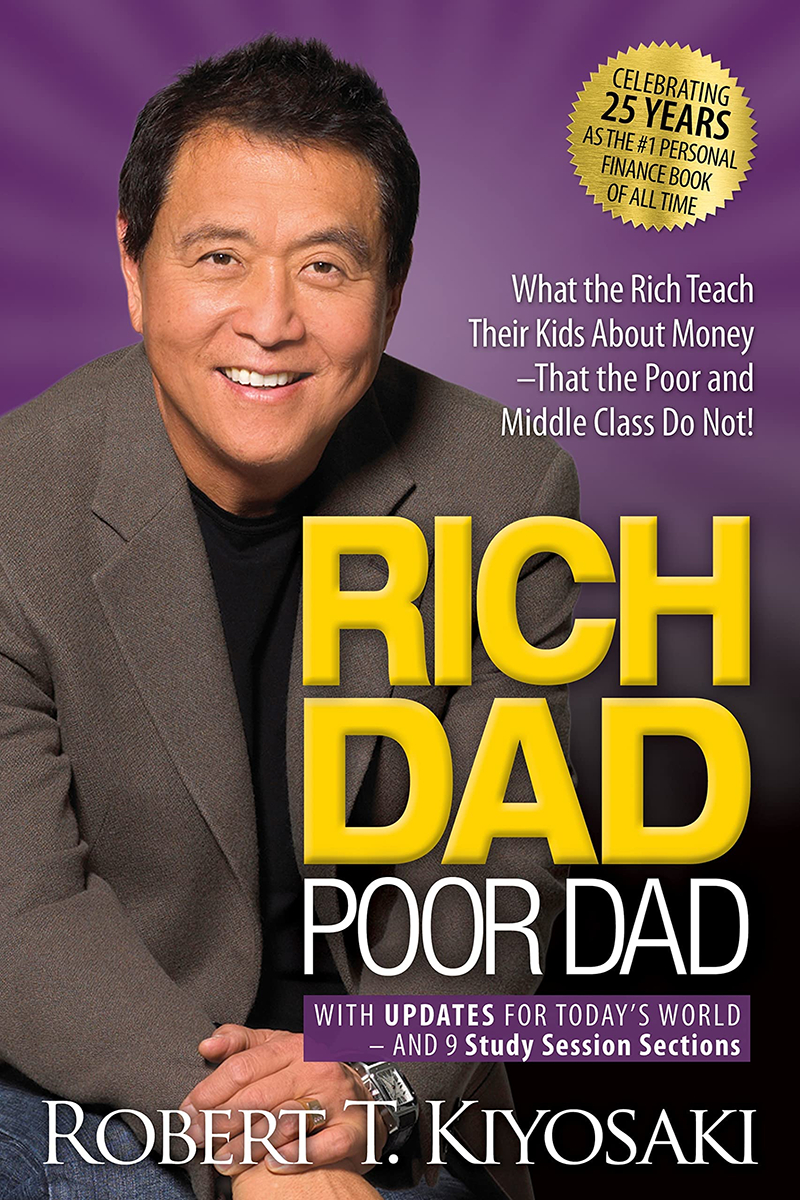
Rich Dad Poor Dad: A Review for Software Engineers
Published in 1997, Rich Dad Poor Dad has become one of the most recognizable personal finance books of the modern era. It is frequently recommended to beginners who want to understand financial literacy, passive income, and wealth building.
The book is structured around two father figures in Kiyosaki’s life. His biological father represents the traditional path of education, stable employment, and long term job security. His “rich dad,” the father of a childhood friend, represents entrepreneurship, asset ownership, and financial independence.
At face value, the book is simple. It is written in a conversational tone and avoids technical jargon. But beneath that simplicity is a deeper thesis about incentives, systems, and control over income. Reading it as a software engineer, I see it less as a motivational finance book and more as a critique of how people interface with economic systems.
The Core Financial Thesis
The central argument is that most people are trapped in what Kiyosaki calls the rat race. They work for money, increase their expenses as income rises, and remain dependent on a paycheck. In contrast, the wealthy prioritize acquiring assets that generate cash flow.
Kiyosaki defines:
- An asset as something that puts money in your pocket
- A liability as something that takes money out
The definition is intentionally simplified. From a technical accounting standpoint, it is incomplete. But as a behavioral model, it is powerful. It forces you to evaluate purchases and financial decisions based on cash flow rather than appearance.
The book emphasizes financial literacy, ownership, tax efficiency, and long term capital allocation. It argues that high income alone does not create wealth. Cash flowing assets do.
What This Means for Software Engineers
Software engineers occupy an interesting economic position. Many earn high salaries relative to national averages. Equity compensation, bonuses, and stock options can further increase income. On paper, this looks like financial security.
But high income does not automatically create financial independence.
In tech, lifestyle inflation is common. Higher compensation often leads to larger mortgages, upgraded vehicles, private schooling, and higher fixed expenses. The dependency on continued employment remains. In volatile markets, layoffs can happen quickly. Compensation structures can change. Stock based income can evaporate.
From an engineering perspective, the question becomes structural:
Is your financial model resilient?
If your primary income source is a W2 job, even a well paying one, you are still dependent on external systems. Kiyosaki’s framework encourages engineers to think about income diversification. Rental properties, equity investments, small businesses, digital assets, or other income producing vehicles become part of a broader capital strategy.
For engineers who understand systems architecture, the analogy is clear. A single point of failure is dangerous. Income concentration is a financial single point of failure.
Entrepreneurship, Leverage, and Risk
Kiyosaki strongly advocates entrepreneurship and the strategic use of leverage, particularly in real estate investing. This is where engineers should apply caution.
Leverage amplifies outcomes. In a rising market, it accelerates wealth building. In a declining market, it magnifies losses. From a systems engineering standpoint, leverage increases volatility in the model.
Many engineers are analytical by nature. Before adopting aggressive leverage strategies, it is essential to consider:
- Liquidity reserves
- Market cycles
- Interest rate exposure
- Downside scenarios
The book does not deeply explore these risk controls. It focuses more on mindset than on implementation mechanics. That is not necessarily a flaw, but it does require the reader to supplement the philosophy with disciplined financial modeling.
View Rich Dad Poor Dad: 20th Anniversary Edition on AmazonFinancial Literacy and Incentive Structures
One of the book’s most compelling arguments is its critique of traditional education. Kiyosaki claims schools produce academically capable graduates who lack financial literacy. While this statement is broad, the underlying point is valid.
Engineers are trained to solve technical problems, optimize systems, and build scalable solutions. Few are formally trained in tax strategy, capital allocation, or investment analysis.
Understanding:
- Corporate structures
- Tax incentives
- Cash flow statements
- Asset depreciation
- Equity compensation mechanics
is part of building long term wealth. Without that literacy, even high earners can stagnate.
For software engineers, this translates into a shift from focusing solely on skill development to also focusing on capital strategy. Income is one input. Asset accumulation and allocation determine long term independence.
Is Rich Dad Poor Dad Worth Reading in 2026?
Yes, but with context.
If you are searching for a technical investing manual, this is not the book. It does not provide detailed portfolio construction guidance or real estate underwriting formulas.
If you are searching for a mindset reset around money, ownership, and financial independence, it remains relevant.
For early career engineers, it introduces foundational language around assets, liabilities, and cash flow. For mid to senior level engineers, it serves as a reminder that income alone does not equal freedom.
The key is to treat the book as philosophical infrastructure, not tactical instruction. Pair it with deeper study on investing, risk management, and tax strategy before implementing aggressive leverage.
Strengths of Rich Dad Poor Dad
The primary strength of Rich Dad Poor Dad is its accessibility. Financial concepts that might otherwise feel abstract are introduced through narrative and conversation. Readers are not buried in spreadsheets or complex formulas. Instead, they are introduced to foundational principles such as asset accumulation, cash flow management, and financial independence.
Another strength is the psychological shift it encourages. The book invites readers to move from an employee mindset to an ownership mindset. That shift alone can influence long term financial decisions. It reframes money from something earned solely through labor to something built through structure and strategy.
The emphasis on financial literacy and asset based wealth creation remains relevant decades after publication. In an era where consumer debt and lifestyle inflation are common, the book’s focus on ownership and cash flow still resonates.
Where the Book Falls Short
There are legitimate criticisms.
First, the book simplifies accounting definitions to make a broader point. This works for mindset development but can create confusion if taken literally.
Second, some of the leverage strategies discussed are risky without adequate capital and risk management controls.
Third, the authenticity of the “rich dad” figure has been debated. Whether symbolic or literal, readers should evaluate the principles independently of the narrative device.
None of these issues invalidate the book’s influence. They simply require discernment.
Final Verdict
From a software engineer’s perspective, Rich Dad Poor Dad is less about real estate or entrepreneurship and more about control over systems.
- Are you architecting your financial life with redundancy and resilience?
- Are you building assets that generate independent cash flow?
- Or are you optimizing within a system you do not control?
The book will not make you wealthy. It will not teach you detailed investment strategy. What it can do is shift your mental model from employee to owner.
For engineers who think in terms of systems, inputs, outputs, and failure modes, that shift is powerful.
My Personal Rating
Rich Dad Poor Dad is an all-time classic. It was one of the first self-help books I really connected with, and it helped shape how I thought about money and personal finance in my late 20s and early 30s. By no means is it a comprehensive financial manual, but its a starting point for thinking structurally about wealth and remains worth reading. Software engineers in particular will appreciate its emphasis on systems, frameworks, and building assets that generate long-term value.
Add it to your library.
View Rich Dad Poor Dad: 20th Anniversary Edition on Amazon