Book Overview
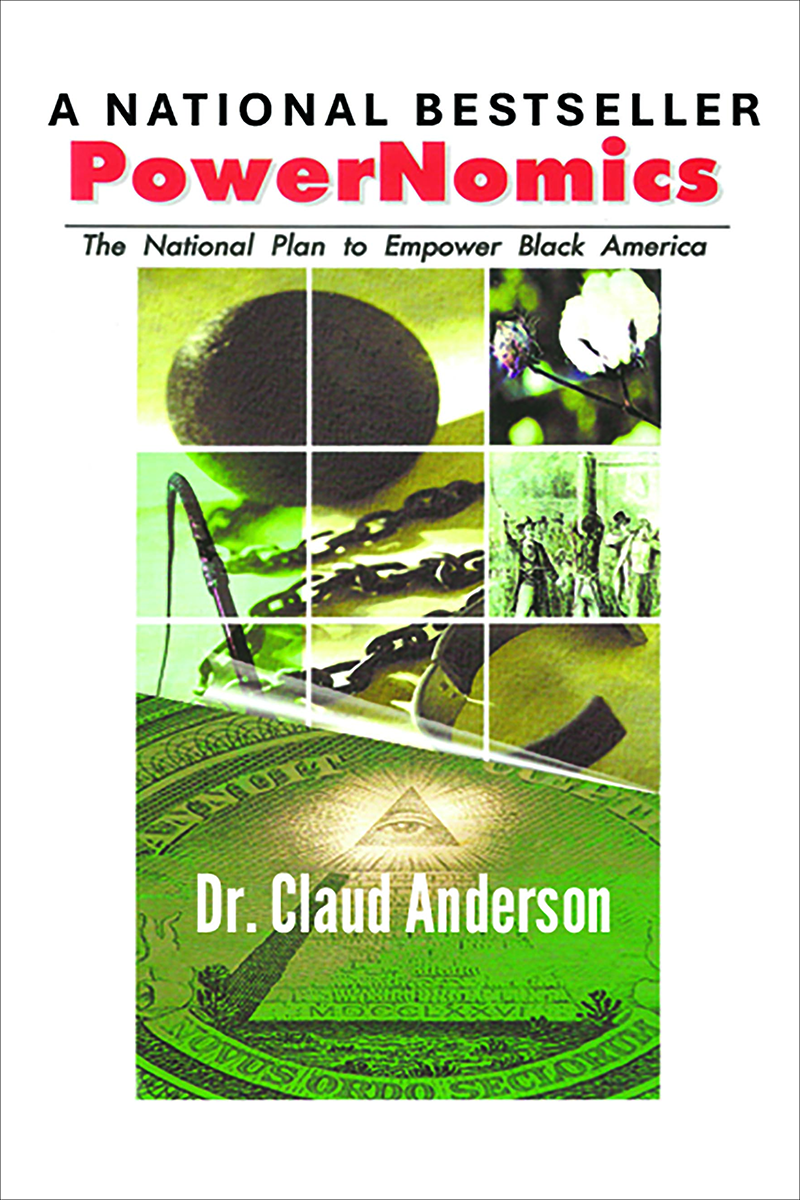
PowerNomics by Dr. Claud Anderson presents a provocative argument about the relationship between race, economics, and power in the United States. In PowerNomics: The National Plan to Empower Black America, Anderson argues that systemic inequality is rooted not primarily in personal prejudice but in disparities of wealth, institutional control, and political influence.
The book proposes a long-term strategy for strengthening Black economic and political power through collective action and institutional development. Anderson frames powernomics as a comprehensive framework for community empowerment built on four interconnected pillars: education, economics, politics, and religion.
Rather than focusing only on individual advancement, Anderson emphasizes the importance of group strategy. His vision for a national plan to empower black America centers on collective ownership, coordinated economic activity, and the development of institutions that can sustain wealth across generations.
From a systems perspective, the book approaches community empowerment as a structured strategy rather than a series of isolated initiatives.
The Core Idea Behind PowerNomics
At the center of PowerNomics is the argument that economic systems determine political and social outcomes. Anderson contends that communities without economic ownership and institutional control remain dependent on external structures.
The philosophy of powernomics encourages Black Americans to prioritize group self-interest and collective strategy when making economic and political decisions. Instead of relying primarily on integration into existing systems, Anderson argues that communities should develop their own economic ecosystems.
This idea forms the foundation of what he describes as a national plan to empower black america. The strategy emphasizes cooperation, resource pooling, and long-term planning designed to build sustainable economic institutions.
Anderson suggests that collective ownership and coordinated investment can strengthen community resilience and expand opportunities for future generations.
Economic Strategy and Community Ownership
One of the most distinctive aspects of PowerNomics is its focus on economic structure.
Anderson introduces the concept of ethno-aggregation, which encourages communities to direct resources toward businesses and institutions that circulate wealth internally. The goal is to build vertically integrated industries capable of supporting employment, investment, and long-term wealth creation.
This strategy is central to Anderson’s vision of powernomics. By concentrating economic activity within the community, he argues that Black Americans can develop stronger financial foundations and reduce dependence on external institutions.
The idea is controversial for some readers, but Anderson presents it as a practical method for implementing a national plan to empower black america.
Education, Politics, and Institutional Development
In addition to economic strategy, PowerNomics places strong emphasis on education and political organization.
Anderson argues that education systems should focus not only on preparing individuals for employment but also on cultivating entrepreneurship, ownership, and strategic thinking. According to his framework, economic literacy and business development are essential components of community empowerment.
Political leverage is another key element of powernomics. Anderson encourages the development of organized voting blocs and independent political institutions capable of negotiating tangible policy outcomes.
The book also highlights the historical role of the Black church as a cultural and economic institution. Anderson views it as a potential foundation for mobilizing resources and strengthening community networks within a broader national plan to empower black america.
View PowerNomics on AmazonStrengths of PowerNomics
One of the most notable strengths of PowerNomics is the clarity of its strategic vision. Anderson does not limit himself to diagnosing problems. He outlines a structured approach to economic and political empowerment grounded in historical analysis and financial data.
Another strength is the book’s emphasis on long-term thinking. The philosophy of powernomics encourages readers to think across generations rather than focusing only on short-term outcomes. This emphasis on institutional development and ownership distinguishes the book from many discussions of economic inequality.
The book also benefits from its interdisciplinary perspective. By integrating economics, politics, culture, and education, Anderson presents a holistic framework for implementing a national plan to empower black america.
Criticisms and Controversies
Despite its influence, PowerNomics has also attracted criticism.
Some readers view Anderson’s vision as ambitious and difficult to implement. The level of coordination, resource sharing, and cultural alignment required for large-scale adoption could be challenging in practice.
The emphasis on ethno-aggregation has also sparked debate. Critics argue that focusing economic activity within specific communities could risk isolation or limit opportunities for broader collaboration.
In addition, certain elements of Anderson’s strategy rely heavily on institutions such as churches, which may not resonate with all members of the Black community. Others question whether the scale of institutional development proposed in the national plan to empower black America can realistically be achieved without significant external support.
Why PowerNomics Still Matters in 2026
Powernomics was introduced to the masses on February 1, 2001. The ideas presented in this groundbreaking book continue to influence discussions about economic inequality, community development, and wealth creation. In part because the African American (or ADOS, or FBA) community continues to face the same economic challenges that presented themselves decades ago – long before Dr. Anderson even conceived the idea of Powernomics. But thank God for the man’s genius!
By framing empowerment as a systemic challenge rather than an individual one, Anderson encourages readers to reconsider how economic structures shape opportunity. His argument suggests that meaningful change requires coordinated strategy, institutional development, and long-term investment.
Whether readers fully agree with his approach or not, the framework of powernomics provides a provocative perspective on the relationship between race, wealth, and power in America.
Final Verdict
PowerNomics is a bold and controversial examination of economic empowerment and community strategy.
Dr. Claud Anderson presents a comprehensive argument for collective ownership, political organization, and institutional development as essential components of a national plan to empower black america. His emphasis on group strategy, economic independence, and generational thinking offers a distinctive approach to addressing systemic inequality.
While some of the proposals may appear ambitious or controversial, the book remains an important contribution to discussions about race, economics, and political power in the United States.
For readers interested in economic justice, community development, and long-term strategies for wealth creation, PowerNomics provides a thought-provoking framework for thinking about the intersection of power, ownership, and opportunity.
My Personal Rating
PowerNomics by Dr. Claud Anderson is one of my personal favorites and I highly recommend it! It is a thought-provoking book that lays out a path for meaningful and transformative change.
View PowerNomics on Amazon