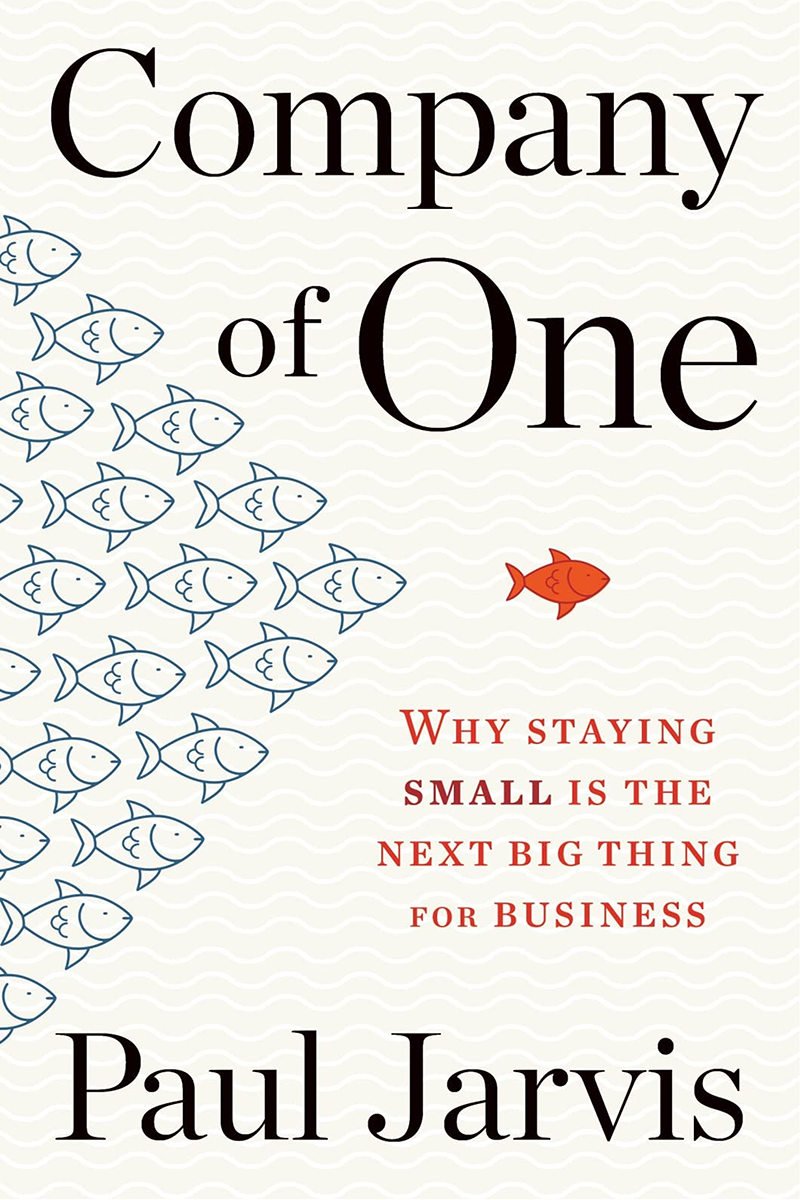
Company of One: Rethinking Growth in Modern Entrepreneurship
Company of One by Paul Jarvis offers a thoughtful challenge to one of the most persistent assumptions in modern entrepreneurship: that growth is always the goal.
Jarvis argues that building a company of one is not a temporary stage before scaling. Instead, it can be a deliberate and sustainable business model built around autonomy, simplicity, and intentional decision-making. Rather than encouraging entrepreneurs to hire large teams, chase venture capital, or pursue aggressive expansion, Jarvis presents an alternative philosophy focused on independence and long-term stability.
Reading the book through a systems and engineering lens, the argument becomes even clearer. A company of one is essentially a system designed to maximize leverage without introducing unnecessary complexity. Instead of scaling through people, the business scales through efficient processes, automation, and carefully chosen opportunities.
The Core Idea Behind a Company of One
At the heart of Jarvis’s philosophy is the idea that bigger is not always better.
Traditional startup culture often treats growth as the primary measure of success. Companies are encouraged to expand rapidly, hire aggressively, and pursue increasingly larger markets. Jarvis challenges this assumption by asking a simple question: what if the optimal size of a business is small?
The concept of a company of one encourages entrepreneurs to define their own version of “enough.” Instead of chasing infinite growth, Jarvis recommends establishing clear limits around income goals, working hours, and the number of clients required to sustain a comfortable life.
This approach reframes entrepreneurship as a design problem. The goal is not to build the largest possible organization but to build a business that fits the life of its owner.
Systems Thinking and Sustainable Entrepreneurship
One of the most compelling ideas in Company of One is that independence often requires strong systems.
Jarvis emphasizes the use of automation, streamlined workflows, and efficient tools to increase capacity without increasing complexity. From a software engineering perspective, this resembles building a scalable architecture that minimizes overhead while maximizing reliability.
Instead of hiring layers of management or expanding teams prematurely, the company of one model focuses on creating processes that handle repetitive tasks efficiently. These systems allow a solo entrepreneur to maintain agility while still operating at a professional scale.
In this sense, Jarvis’s philosophy aligns closely with engineering principles such as reducing friction, eliminating unnecessary complexity, and optimizing systems for long-term stability.
Relationship-Driven Business Models
Another important lesson in Company of One is the emphasis on relationships rather than volume.
Jarvis argues that many small businesses benefit more from a small group of loyal clients than from a constant search for new customers. By focusing on trust, expertise, and consistent value, entrepreneurs can create long-term relationships that generate sustainable revenue.
This approach also reduces the pressure associated with constant growth. Instead of expanding endlessly, the company of one model encourages entrepreneurs to strengthen the quality of their existing relationships.
Jarvis suggests that teaching, sharing knowledge, and offering genuine assistance can attract the right clients naturally. Content, workshops, and thoughtful communication become part of the business strategy.
View Company of One on AmazonSimplicity as a Competitive Advantage
One of the book’s most practical insights is that simplicity can be a powerful advantage.
Complexity often appears impressive, but it frequently introduces inefficiency. Jarvis encourages entrepreneurs to design businesses that operate with minimal friction. Clear offerings, streamlined processes, and focused services allow a company of one to remain flexible and resilient.
For engineers and analytically minded readers, this philosophy feels familiar. Well-designed systems are often elegant because they remove unnecessary components. In the same way, a well-designed business can operate effectively without layers of complexity.
Strengths of Company of One
One of the book’s greatest strengths is its purpose-driven perspective. Jarvis writes in a clear and approachable style, grounding his ideas in personal experience rather than abstract theory.
Another strength is the book’s practicality. Instead of offering vague motivational advice, Jarvis encourages readers to define their own metrics of success, create simple systems, refine their offerings, and cultivate meaningful relationships with clients.
The philosophy behind a company of one also stands out because it challenges the dominant narrative of hustle culture. Jarvis presents examples of entrepreneurs who intentionally limit growth in order to maintain control, creativity, and work-life balance.
This perspective is refreshing in an era where many business books emphasize scaling at all costs.
Limitations of the Book
While Company of One offers a compelling philosophy, the book occasionally repeats its core argument that growth is not always desirable. Although repetition reinforces the central theme, some readers may find certain sections redundant.
Another limitation is the book’s primary audience. The concept of a company of one is particularly well suited to freelancers, consultants, and independent creators. Entrepreneurs building large-scale organizations may find the philosophy less applicable.
Finally, while Jarvis encourages automation and system design, the book does not provide detailed technical frameworks for implementing those systems. Readers seeking highly structured templates or operational blueprints may need additional resources.
Why the Company of One Model Still Matters in 2026
The concept of a company of one feels increasingly relevant in today’s digital economy. Technology now allows individuals to build profitable businesses using online platforms, automation tools, and global communication networks.
This shift makes it possible for entrepreneurs to design businesses that prioritize independence rather than expansion. Instead of building large organizations, many individuals now focus on creating sustainable, efficient operations that support their personal goals.
Jarvis’s philosophy reminds readers that success does not always require scale. Sometimes the most effective business is one that remains intentionally small.
Final Verdict
Company of One is a thoughtful and refreshing contribution to modern entrepreneurship literature.
Paul Jarvis presents a compelling argument that growth should be intentional rather than automatic. By focusing on autonomy, simplicity, and meaningful relationships, the company of one model offers an alternative path for entrepreneurs who value independence over expansion.
Although the book is not a technical blueprint for building systems or automation frameworks, its philosophy encourages readers to rethink what success in business actually means.
My Personal Rating
For freelancers, consultants, creators, and independent professionals, Company of One provides a powerful reminder that small business, when designed thoughtfully, can be both profitable and deeply fulfilling. This book was gifted to me by someone I’m very close with, so part of my rating may very well be sentimental. Still, Paul Jarvis’ storytelling, personal anecdotes, and conversational narrative are undeniable. Company of One is both engaging and relatable, and reading it helped reshape my own perspective on what success can look like.
View Company of One on Amazon